
Go fast to go slow – reflections on a year of slow science


We chose for last year’s theme of the Young Academy Leiden to be slow science. Why did we slow down, how did we do it, and what did we learn?
The pace of (academic) life feels ever faster. Every day brings pressure to publish more, teach more, apply for grants, respond to emails, etc. It often feels impossible to carve out space for the kind of deep, deliberate thinking that meaningful research requires - especially in the midst of escalating political, AI, climate, [insert all the other] crises. In this space, returning to the basis of connecting with ourselves and our compass is crucial for not getting swept away in this maelstrom. The theme of Slow Science has been explored earlier by others widely, see here, here, here and here.
As members of the academic community, we at YAL are not immune to the pervasive narratives of speed and productivity. But, crucially, we can choose to push back on these narratives and create pockets of slowness, together.
Cultivating slowness
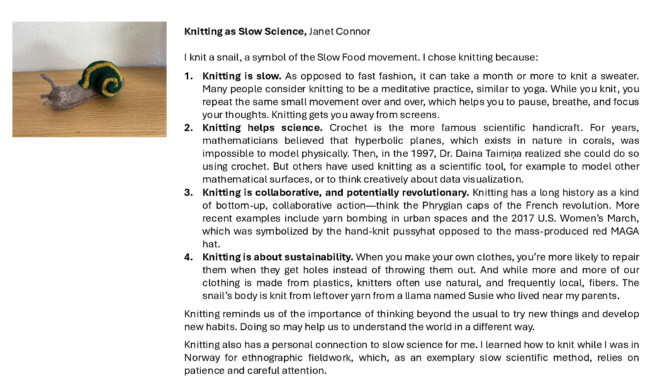
Following a book club discussion of ‘The Slow Professor’, we launched the previous academic year at our inauguration (September 2025), with a talk by Professor Annemieke Aartsma-Rus. She spoke briefly about her research, and elaborated on her way of slowing down occasionally: folding origami during meetings, leaning on trusted colleagues to deflate one’s balloon index (spoiler: if you hear yourself saying ‘do you even know who I am’, it’s time for some ego deflation) and the importance of playfulness in sticking with a research question for the long haul. In the spirit of our theme, prof. Aartsma-Rus gave away snail origamis during the inauguration.
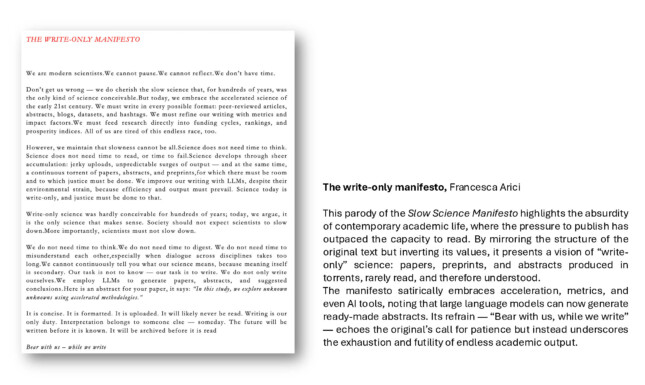
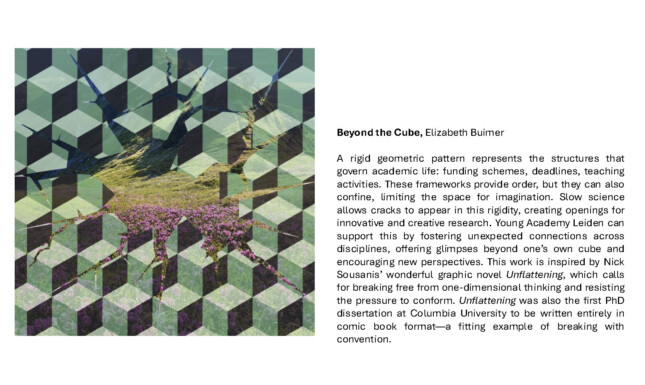
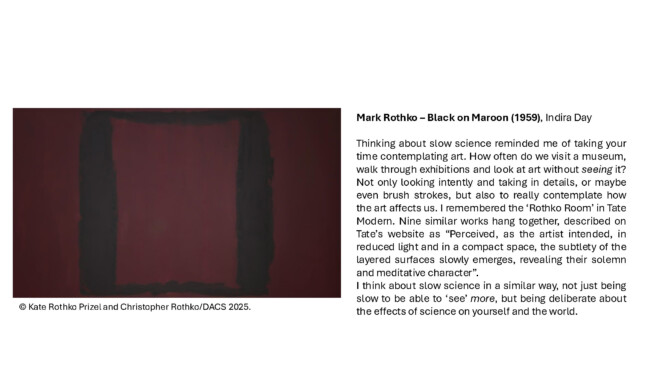
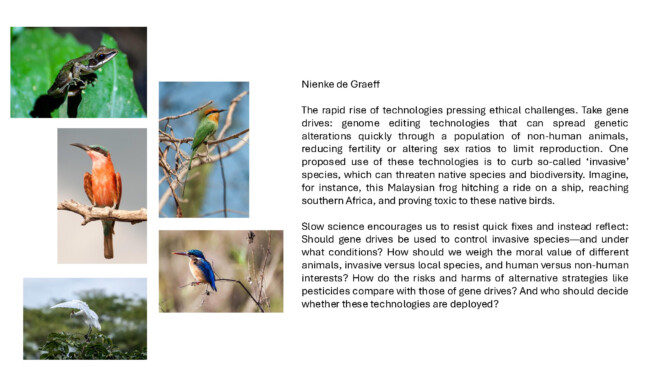
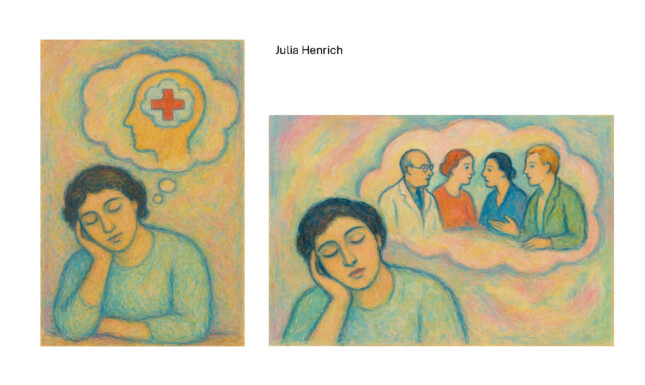
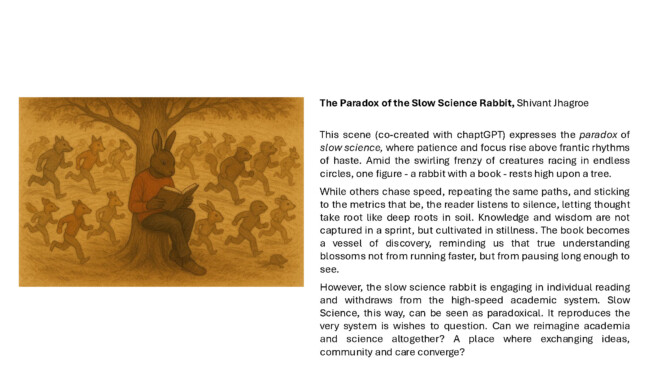
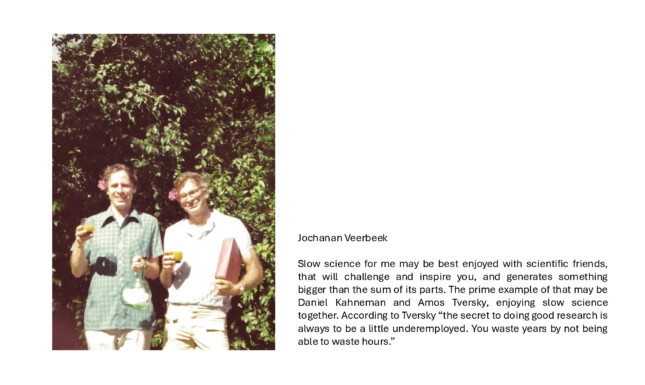
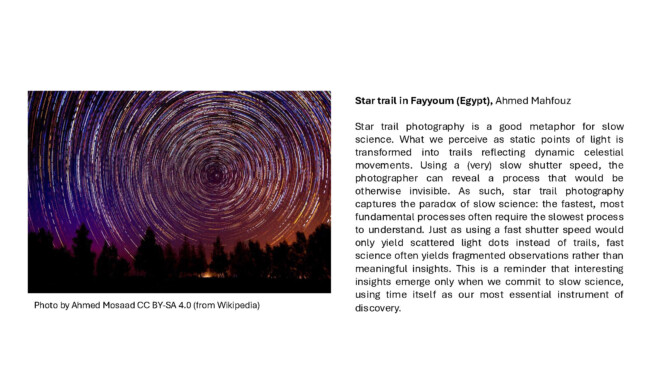
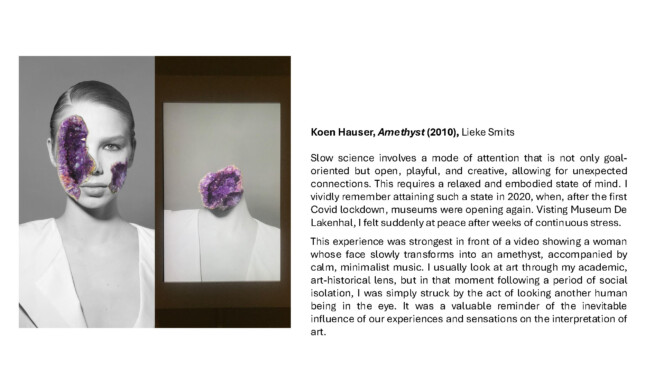
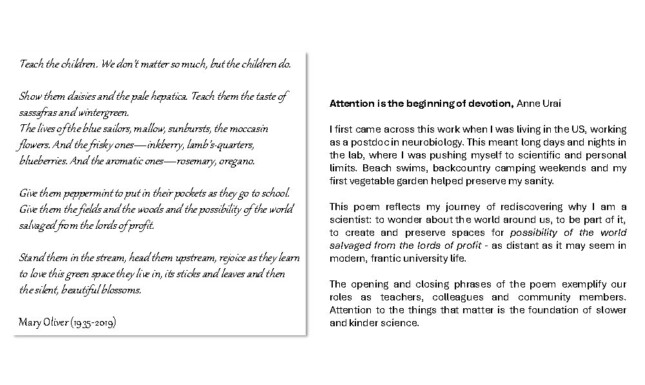
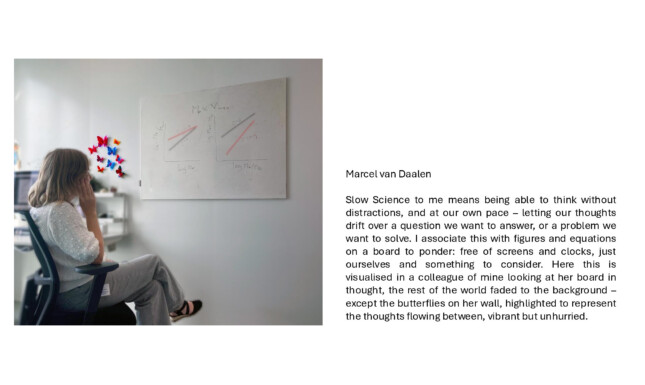
After our inauguration ceremony, we enjoyed an exhibition curated by Eduard Schmidt and Thanja Lamberts, where each YAL member contributed artworks or reflections representing what slow science means to them.
Assignment: A Representation of Slow Science
Science should not be rushed; it needs slowness to make unexpected connections and foster truly meaningful discoveries. As a movement in research and academia, it calls for a more deliberate, reflective, and patient approach to scientific work, countering the increasing pressure for speed, productivity, and immediate results.
Art and science have always been closely related. Whether it was the arts inspiring researchers to better understand the world around us, or painters depicting education and science, science and art are ways of making something clear, in part through the intrinsic use of imagination. Slow science resists the pressure of speed and productivity, and instead values depth, patience, and attention. Art often works in the same way: it asks us to pause, to notice details, and to engage differently with the world. We think, therefore, that making use of an artistic expression might be a suitable way to go about slow science.
Your assignment for the YAL inauguration is to choose a representation of slow science. By selecting a representation, you are invited to explore what slow science looks like to you, what it feels like, or maybe even what you hope slow science to be.
Making Slowness Structural: Our General Meetings
Beyond a one-time theme, we embedded slowness into our everyday practices. Throughout the year, we put in place several elements at our three YAL-wide general meetings that encouraged us to ‘go slow to go fast’.
Our first general meeting at the Academy Building (October 2025) was facilitated by Doris Gottlieb, a coach specialized in deep connection work. Rather than diving headfirst into projects, Doris helped us get to know each other better as people, connect with our shared motives as YAL members, and to explore the past, present and future of YAL together. Building on what we have learned from Doris, we started our second general meeting at PLNT (January 2026) with a ‘landing’ exercise using Dixit cards. This was a playful way for each YAL member to describe how they see YAL and their place within the community. At our third meeting at The Hague Campus (April 2026), we stepped away from project work in the meeting room and took a long lunch break to stroll through the Haagse Bos. We came across some beautiful art reflecting on the meaning of nature so close to the busy city centre.
Beyond our general meetings, we also tried to schedule our smaller workgroup meetings in-person around 11am, allowing for a relaxed lunch break together instead of rushing off afterwards. Small changes, but ones that shifted the rhythm of our interactions and collaborations.
Exploring Slowness Through Our Seasons of Interdisciplinarity
Our Season of Interdisciplinarity also connected with slowness during the Spring of Time, where we explored how different disciplines understand time itself. We hosted a session with Studium Generale on ‘time and temporalities across disciplines’, from medieval studies to archeology and astronomy. We then returned to the realities of time and the challenges of slowness during an interfaculty lunch where YAL members tracked their planned week and reflected on the demands of modern-day academia. The contrast was striking! Lastly, we had planned a wonderful Deep Time Walk in the Haagse Bos, which unfortunately had to be rescheduled because of the first-ever code red for a heatwave in The Netherlands. The bitter irony of extreme weather causing us to cancel this walk, aimed to help us reflect on humanity’s influences on our planet, is not lost on us. The Deep Time walk took place in September instead, and brought a much-needed change in temporal perspective from our usual working weeks and academic years to eons of geological time.
What We Learned: Speed Through Slowness
We closed this YAL year with a goodbye to the YAL members that are becoming YALumni. Staying rebellious, we did two activities that were rather fast than slow: getting out of the YAL Escape Box within half an hour, and taking turns doing ‘PowerPoint Karaoke’ about the lesson’s learned by our YALumni. What did slowing down bring us? By prioritizing time for connection, before jumping into projects, we created better conditions for our work together. It was easier to set priorities, think about the impact of our work, and our ideas moved from concept to reality faster. The deliberate slowness, perhaps paradoxically, perhaps unsurprisingly, turned out to be the fastest route to meaningful and fun work.
As we begin the new academic year, this remains our challenge and invitation: to create pockets of slowness in a relentlessly fast world, knowing that in doing so, we protect space for the thinking that matters.

0 Comments